
Not every cannabis product belongs in the same box. A vape cartridge, a jar of flower, and a chocolate bar all behave differently, get handled differently, and face different rules once they land on a dispensary shelf. Something as specific as cannabis tubes packaging for a cartridge has almost nothing in common with what a jar of flower needs. That’s the real starting point when learning how to choose cannabis packaging — the product itself, not the box design, should drive the decision.
This guide walks through that decision in order: matching packaging to the product, understanding the compliance rules behind it, picking a material that actually holds up, and building a design that still feels like your brand once all of that is settled.
Matching Cannabis Product Packaging to Each Product Type
Cannabis product packaging needs to match how the item is actually used and stored. What works for dried flower can fail completely for a concentrate or a pre-roll.
| Product Type | Packaging Need | Common Format |
| Flower | Airtight, odor-blocking, moisture control | Mylar pouch or rigid jar |
| Concentrates | Non-stick, UV protection, small-batch precision | Silicone-lined containers, glass jars |
| Pre-rolls | Crush resistance, easy single-unit dispensing | Tubes or slim boxes |
| Vape cartridges | Leak prevention, secure closure | Rigid inserts, tube packaging |
| Edibles | Child-resistant, tamper-evident | Folding cartons with locking mechanisms |
A joint that arrives crushed or bent is essentially unsellable, which is why a dedicated pre roll packaging format built around crush protection matters more here than almost anywhere else.
Cartridges roll easily and need a closure that won’t loosen in transit. A tube-based format tends to outperform flat boxes here, since it holds its shape and keeps a single unit secure.
Concentrates are sticky and light-sensitive, often sold in very small quantities. Cannabis concentrate packaging typically uses non-stick, UV-resistant materials that a standard folding carton simply can’t match.
The Rules Behind Cannabis Packaging Requirements
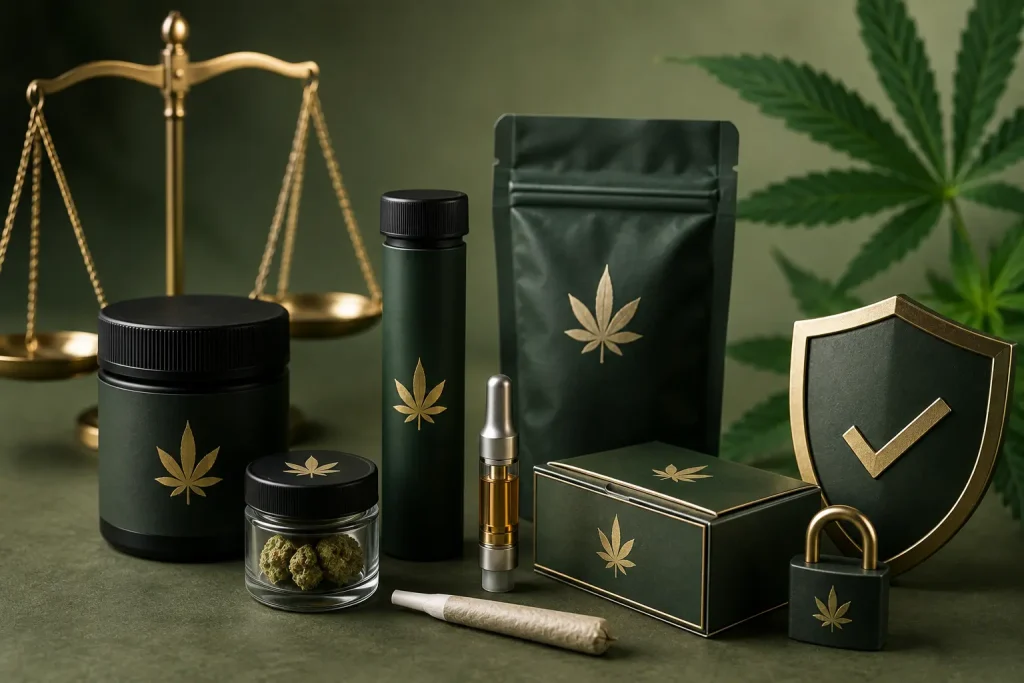
Every state with a legal cannabis market has its own packaging rules, and they rarely line up perfectly with one another. Cannabis packaging requirements typically cover labeling, opacity, resealability, and proof that a product hasn’t been opened before it reaches the buyer. Knowing these rules upfront saves a brand from redesigning packaging after a batch has already been printed.
Labeling and Disclosure Rules
Most states require specific information on the package itself — potency, batch number, warnings, and licensing details — often in a minimum font size or placement that leaves little room for creative layout.
Opacity and Resealability Standards
Many markets require packaging that isn’t see-through and that can be closed again after first use, particularly for flower and other loose-form products sold by weight.
Cross-State Compliance Gaps
These rules exist because cannabis products are consumable and, in many cases, look similar to everyday snacks or beverages. A packaging format that passes review in one state can fall short in another, which is why brands selling across multiple markets usually need packaging that’s flexible enough to meet the strictest applicable standard rather than the easiest one.
Where Child-Resistant Cannabis Packaging Fits In
Compliance isn’t only about labeling. Child-resistant cannabis packaging is a separate, specific requirement built around one goal: keeping young children from accessing the product inside, regardless of how the outer box looks or what it says.
This typically means push-and-turn caps, multi-step locking cartons, or specialized closures that have been tested against a defined safety standard. It’s a feature that needs to be engineered into the packaging from the start, not added as an afterthought once the design is finalized.
Kraft Packaging
Kraft board works well for outer boxes and secondary packaging where the priority is sturdiness and a natural, premium look rather than airtight protection.
Mylar Packaging
Mylar bags remain one of the most reliable options for flower and pre-rolls, since the material blocks light and odor while staying lightweight and cost-efficient at scale.
Rigid Packaging
Rigid boxes are the go-to choice for higher-end products like vape kits or gift sets, where structure and shelf presence matter as much as protection.
Common Mistakes Brands Make When Choosing Packaging
- Picking a format based on looks before checking if it fits the product
- Ignoring humidity or light exposure during storage and shipping
- Assuming one packaging type will work across every product line
- Leaving compliance labeling as an afterthought in the design process
- Choosing a cheaper seal that doesn’t hold up to real handling
5 Factors Behind Secure Cannabis Packaging
Choosing packaging gets easier once it’s broken down into a short list rather than one big decision. Before finalizing anything, it helps to confirm the basics that make secure cannabis packaging actually secure in practice.
✓ Does the format match how the product is stored and used?
✓ Does it meet your state’s labeling and resealability rules?
✓ Is the seal genuinely tamper-evident, not just decorative?
✓ Will the material hold up in transit and on-shelf handling?
✓ Does the design leave room for compliant, readable labeling?
Building Custom Cannabis Packaging Around Your Brand
Once the functional side is settled, there’s still room to make the packaging feel distinctly yours. Custom cannabis packaging lets a brand stand out on a shelf that’s often crowded with similar-looking boxes and jars.
- Choose finishes (matte, gloss, soft-touch) that reflect your product’s positioning
- Use structural cutouts or windows where compliance rules allow it
- Keep branding elements consistent across every product line and format
- Reserve space for required labeling without crowding the design
Final Thoughts
Choosing the right packaging comes down to working backward from the product itself — its fragility, its compliance requirements, and how it’ll actually be handled before it reaches a buyer. That’s really what how to choose cannabis packaging comes down to: foundation first, then material choice, then branding. At Custom Cannabis Boxes, that same product-first approach shapes every packaging solution built for brands entering or scaling in the U.S. market.
Frequently Asked Questions
How do I know which packaging format fits my product?
This is really the core of how to choose cannabis packaging — start with how the product is used and stored. Moisture-sensitive items like flower need airtight formats, while fragile items like pre-rolls need crush protection first.
Do all cannabis products legally require child-resistant packaging?
In most U.S. markets, yes, particularly for edibles and other consumable forms. Requirements vary slightly by state, so it’s worth checking local regulations directly.
Is mylar or rigid packaging better for cannabis flower?
Mylar is generally preferred for everyday flower packaging due to cost and odor control, while rigid packaging is better suited to premium or limited-run products.
Can I use the same packaging format across different product types?
It’s possible for similar items, but concentrates, pre-rolls, and edibles each have different protection needs, so a single format rarely works well across all of them.
How often do cannabis packaging rules change?
Fairly regularly, since each state updates its regulations as its market matures. It’s worth reviewing requirements periodically rather than assuming they’re fixed.
Ready to get your packaging right the first time? Request a Custom Quote or Talk to Our Packaging Team today.