

Picture this: a first-time customer walks into a dispensary, picks up your product, and notices the seal is already broken. In that single second, months of brand-building disappear. They don’t wait around to find out what happened — they put it back on the shelf and buy from someone else.
This is exactly the moment tamper-evident packaging for cannabis is designed to prevent. It’s the physical proof that tells a customer, a budtender, and a regulator that nothing has touched this product since it left your facility. As more brands turn to custom cannabis packaging to stand out on crowded shelves, that proof carries real weight.
This guide breaks down what tamper-evident packaging is, why it’s non-negotiable for cannabis brands, and what to look for when choosing packaging that keeps your products compliant and credible.
Defining Tamper-Evident Packaging in Practical Terms
Before choosing any packaging format, it helps to understand exactly what this term covers and why it gets treated differently from other packaging features. The concept is simple on the surface, but the details are what actually protect a product once it leaves the facility.
The Basic Definition
Tamper-evident packaging refers to any packaging design that shows a clear, visible sign when it has been opened, altered, or resealed. If someone opens the package, there’s an obvious mark left behind: a broken seal, a torn tab, a cracked band, or a void message that appears once the seal is disturbed.
How It Differs From Tamper-Proof Packaging
It’s easy to confuse the two, but they’re not the same thing. Tamper-proof packaging claims to be nearly impossible to breach in the first place, while tamper-evident designs focus purely on visibility — they don’t stop someone from opening the package, but they make sure any attempt leaves undeniable proof behind.
Why It Matters for Cannabis Products Specifically
For cannabis products specifically, this matters on two fronts. First, it protects the end consumer from receiving a product that may have been opened, adulterated, or exposed to contamination before purchase. Second, it protects your business from liability, product returns, and disputes about whether an item left your facility in its original condition.
Cannabis Packaging Requirements Across U.S. Markets
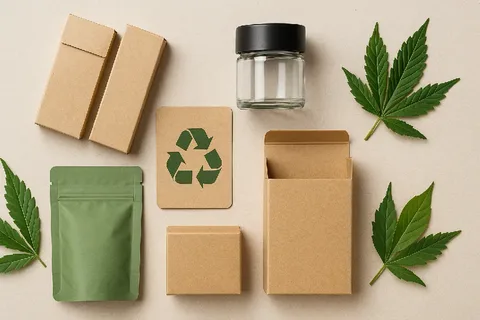
Unlike many consumer goods, cannabis products are governed by strict, state-specific rules covering how they must be packaged, sealed, and labeled before they reach a dispensary shelf. Most legal markets in the U.S. now require some form of tamper-evident cannabis packaging as part of their licensing and compliance framework, alongside child-resistant closures and clear labeling. For cannabis dispensary packaging specifically, this means every unit needs to meet that baseline before a budtender can even place it on display.
Regulators care about this for a straightforward reason: cannabis products are consumable, often look similar to regular food items (especially edibles), and need a documented chain of custody from cultivation or manufacturing to the final sale. A visibly intact seal is one of the simplest ways to prove that chain hasn’t been broken.
Falling short of these cannabis packaging requirements isn’t a minor issue. It can lead to failed compliance audits, product recalls, fines, or in serious cases, the suspension of a dispensary’s ability to carry your line at all. For a growing brand, that kind of setback can undo years of relationship-building with retailers.
Compliance Isn’t the Only Reason This Matters
It’s easy to treat tamper-evident cannabis packaging as a box to check for state approval, but the benefits go well beyond passing an inspection.
- Consumer confidence at the point of sale. A visibly sealed package reassures buyers instantly, without them needing to ask a budtender any questions.
- Protection against contamination. Cannabis flower, concentrates, and edibles are all sensitive to air, moisture, and handling. A proper seal keeps the product exactly as it was when it left production.
- Fewer disputes and returns. When a seal is intact, there’s no ambiguity about whether a customer received an unopened, unaltered product.
- Brand reputation in a crowded market. As more brands compete for shelf space, the ones that visibly prioritize safety and integrity tend to earn repeat customers faster.
- Reduced theft and diversion risk. Tamper-evident features make it harder for products to be opened, resealed, and passed off as untouched during transit or storage.
Each of these points on its own might seem small, but together they shape how a dispensary buyer and an end consumer perceive your brand the moment they pick up your product.
Tamper-Evident vs. Child-Resistant: Two Different Jobs
It’s worth clearing up a common mix-up. Tamper-evident features and child-resistant cannabis packaging solve two separate problems, even though they often appear on the same package.
Child-resistant packaging is engineered to prevent young children from opening a container, usually through mechanisms like push-and-turn caps, multi-step locks, or specialized closures that meet specific testing standards. Tamper-evident packaging, on the other hand, is about detection, not prevention — it doesn’t necessarily stop someone from opening the package, but it makes it obvious if they did.
| Feature | Tamper-Evident Packaging | Child-Resistant Packaging |
| Purpose | Shows visible proof if opened | Prevents young children from opening it |
| How it works | Broken seal, torn tab, or void mark | Push-and-turn caps, multi-step locks |
| Focus | Detection after the fact | Prevention before it happens |
| Required for | Proving product integrity | Child safety compliance |
A fully compliant cannabis product typically needs both working together: a closure that’s genuinely difficult for a child to open, combined with a seal or indicator that reveals any attempt to access the contents beforehand. Treating these as interchangeable is one of the more common mistakes brands make when sourcing packaging, and it’s one that can trip up an otherwise well-designed product during a compliance review.
Choosing Secure Cannabis Packaging That Holds Up
Not all tamper-evident features are created equal, and some hold up far better than others once a product is in transit, on a shelf, or handled repeatedly by staff. When evaluating secure cannabis packaging for your line, a few things are worth checking closely.
How the Seal Fails When Broken
Look at how the seal actually fails when broken — does it leave a permanent, unmistakable mark, or could it be pressed back into place without much evidence? A weak seal defeats the entire purpose.
Material and Storage Conditions
Consider the material itself, since some seals degrade or lose adhesion in humid storage conditions common to cannabis facilities. The seal needs to hold up long before it ever reaches a shelf.
Fitting the Seal into Your Branding
Think about how the tamper-evident element fits with your existing branding. The best solutions integrate seamlessly into the box or label design rather than looking like an afterthought bolted on at the last step.
Working with the Right Packaging Partner
Working with a packaging partner that understands cannabis packaging compliance from the ground up makes this process far easier, since state requirements shift and vary, and a packaging supplier who tracks those changes can save a brand from costly redesigns down the line.
Conclusion
Tamper-evident packaging for cannabis isn’t just a regulatory checkbox — it’s a signal to everyone who touches your product, from the dispensary buyer to the end consumer, that your brand takes safety and integrity seriously. As competition across legal markets keeps intensifying, the brands that treat packaging as part of their trust-building strategy, not an afterthought, are the ones that keep earning shelf space and repeat customers.
At Custom Cannabis Boxes, this is exactly the kind of packaging thinking built into every solution we design — engineered to meet compliance requirements without compromising on brand presentation. Whether you’re outfitting a single product line or an entire catalog, getting the seal right from the start protects both your customers and your reputation.
Frequently Asked Questions
Is tamper-evident packaging required by law for cannabis products?
In most legal U.S. markets, yes. Tamper-evident packaging for cannabis is typically required alongside child-resistant closures before a product can be sold at a licensed dispensary.
Does tamper-evident packaging also need to be child-resistant?
Usually both are required together. Tamper-evident features prove a product hasn’t been opened, while child-resistant closures physically prevent young children from accessing it — they serve different purposes and aren’t interchangeable.
What are common examples of tamper-evident features?
Shrink bands, foil induction seals, void-message labels, tamper tape, and heat-sealed pouches are among the most widely used options in cannabis packaging.
Can tamper-evident packaging still look premium and on-brand?
Yes. Modern tamper-evident solutions can be integrated directly into custom box designs, labels, and closures, so compliance doesn’t have to come at the cost of presentation.
How often do cannabis packaging requirements change?
Fairly often, since each state sets its own rules and updates them as the industry matures. Working with a packaging partner that actively tracks these changes helps avoid compliance gaps.